
FICO® Score - a Brief Explanation
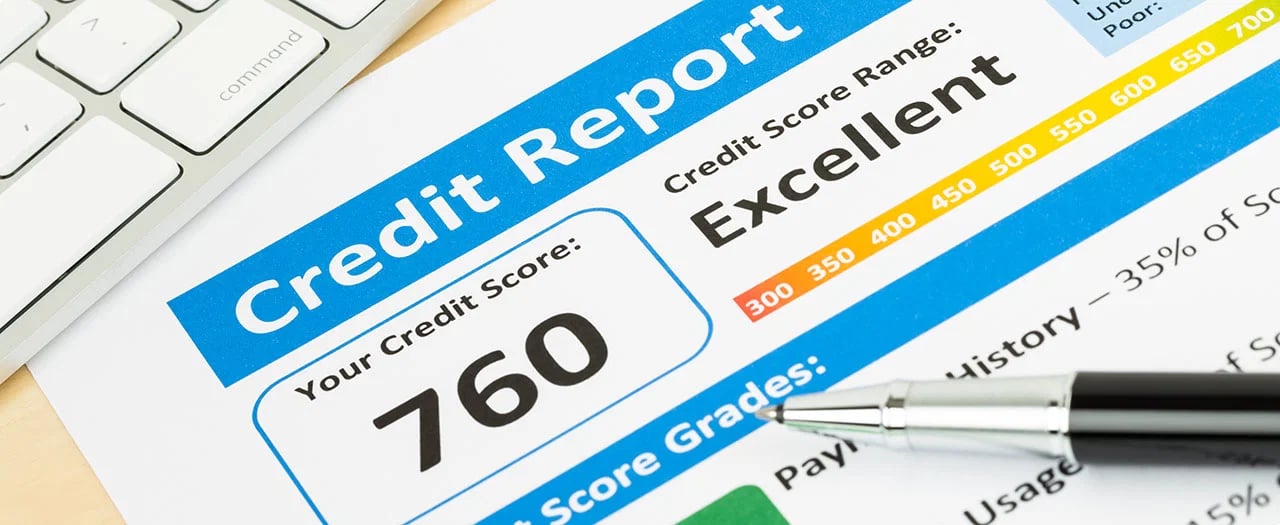
When you apply for a mortgage loan, you expect your lender to pull a credit report and look at whether you’ve made your payments on time. What you may not expect is that they seem to be more interested in your FICO® score.
“What’s a FICO® score?” is a common reaction.
Each time your credit report is pulled, it is run through a computer program with a built-in scorecard. Points are awarded or deducted based on certain items such as how long you have had credit cards, whether you make your payments on time, if your credit balances are near maximum, and assorted other variables. When the credit report prints in your lender’s office, the total score is displayed. Your score can be anywhere between the high 300’s and the low 850’s.
Lenders wanted to determine if there was any relationship between these credit scores and whether borrowers made their payments on time, so they did a study. The study showed that borrowers with scores above 680 almost always made their payments on time. Borrowers with scores below 600 seemed fairly certain to develop problems.
As a result, credit scoring became a more important factor in approving mortgage loans. Credit scores also made it easier to develop artificial intelligence computer programs that could make a “yes” decision for loans that should obviously be approved. Nowadays, a computer and not a person may have actually approved your mortgage.
In short, lower credit scores require a more thorough review than higher scores. Often, mortgage lenders will not even consider a score below 600.
Some of the things that affect your FICO score are:
FICO® actually stands for Fair Isaac and Company, which is the company used by the Experian (formerly TRW) credit bureau to calculate credit scores. TransUnion and Equifax are two other credit bureaus that also provide credit scores.

Discover the essential strategies for marketing your home effectively to secure the best price.

Learn how to properly document your assets and verify your down payment for a smooth home buying process.

A comprehensive guide to understanding the various closing costs involved when buying or refinancing your home.

In addition to being pre-approved, it’s important to be pre-approved with a legitimate lender.

Understand how your FICO® score influences your mortgage approval, interest rates, and overall home buying power.

Discover why title insurance is a vital investment for homebuyers to protect their property rights and ensure peace of mind.

Demystifying the closing process: A guide to understanding title and settlement costs for your new home.

Learn the risks, the different types of foreclosures, and the essential steps to protect your investment.

Foreclosed properties are very likely to be burdened with overdue taxes, liens and clouded titles.
Looking for a Realtor® who listens and guides you personally? Let’s talk about your goals and create a real estate plan that fits your next chapter and priorities.